News: October 2026
The Stretching Myth
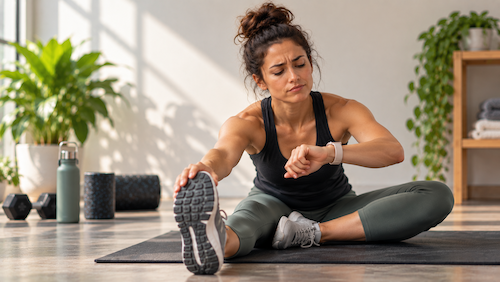 Stretching has a reputation problem. More accurately, it has a reputation it hasn't quite earned. Most people think of stretching as essential. A pillar of fitness. Something you're supposed to do to prevent injury, reduce soreness, improve posture, and keep your body "loose."
But the evidence tells a different story.
A recent consensus paper brought together twenty experts to answer a simple question: what does stretching actually do? The answer is surprisingly limited.
Stretching improves flexibility. That's it. Both short-term and long-term stretching can increase range of motion.
But even here, there's a catch. Stretching isn't special. Strength training and movement can improve flexibility just as well, often more efficiently, and with all the added benefits that come with exercise.
Simply put, there are better ways to improve flexibility. But is increased flexibility even a worthwhile goal? Another misconception - many people believe that more flexibility equals better health. It can be, if you're working to regain flexibility after an injury or surgery. Otherwise, not so much.
The evidence for most of the benefits people associate with stretching is either weak or inconsistent, and many claims are unsupported.
- Injury prevention? Nope.
- Soreness after a workout? Doesn't help.
- Posture? No meaningful effect.
- Strength or muscle growth? Minimal, and inefficient.
There are a few areas where stretching shows small effects, but they come with important caveats:
- It may slightly reduce muscle or tendon stiffness, but the effect is modest, requires a significant time investment, and isn't clearly beneficial.
- It may produce small gains in strength or muscle size, but only with a significant time investment, and far less effectively than strength training.
- There's even some early evidence of cardiovascular benefits, but it's preliminary, and again, better achieved through other forms of exercise.
In other words, these aren't strong, practical reasons to rely on stretching for health or performance.
One of the most common reasons people stretch is to "loosen tight muscles." But even that idea is more complicated than it sounds.
With practice, stretching can feel easier. We don't know for sure why flexibility increases, but research shows that it is not because your tissues are lengthening in any meaningful or lasting way. Modern pain science theorizes that it's more likely that your nervous system is adapting, increasing your tolerance to the sensation of stretching.
Interestingly, reducing stiffness isn't always a good thing. Tendons, for example, are supposed to be somewhat stiff. That stiffness helps them store and release energy efficiently. Too much "looseness" can actually work against you.
So why does stretching feel so good? It can be calming, grounding, and increase body awareness. It provides an opportunity to move, breathe, and slow down. Feeling good is a perfectly valid reason to do it.
But it's important to understand that stretching is not fixing something broken, it's not preventing injury, and it's not reducing soreness.
Stretching isn't useless. It's just way overrated. It's not a necessary ritual and it's certainly not something you need to force yourself through in the name of health.
If you enjoy it, keep it. If you don't, you're not missing anything essential.
Stop Digging Into Muscle Knots! Try This Instead
Grab a small ball and learn how to relieve muscle knots and trigger points effectively and without pain.
You'll learn:
- How much pressure to use (it's much less than you think)
- Why painful trigger point massage can make things worse
- How to reduce muscle tenderness by calming the nervous system
- A simple technique you can use at home
- How to know when to increase pressure - and when not to
Although I demonstrate the technique on the upper back and shoulders, you can use the same principles for muscle knots almost anywhere on the body.
What's new with me ...
Jesse, Sienna, and I spent Labor Day weekend with friends in beautiful Ocean City, Maryland. We got a good dose of beach time to end the summer.
Sienna is now back to school - 8th grade - and I am back to a full massage therapy schedule! We're enjoying being outdoors in these beautiful temperatures.

Call or text me today
917-359-8641
I'd be happy to answer
any questions you have!
Massage@Rachel-Richards.com
Subscribe to my Youtube channel!


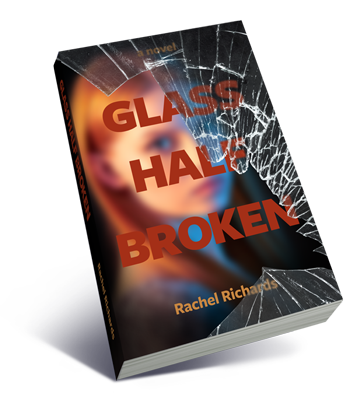
Available now!

Available now!
Did you know?